


Commercial Roofing
7 Benefits of Spray Foam Roofing for Texas Buildings
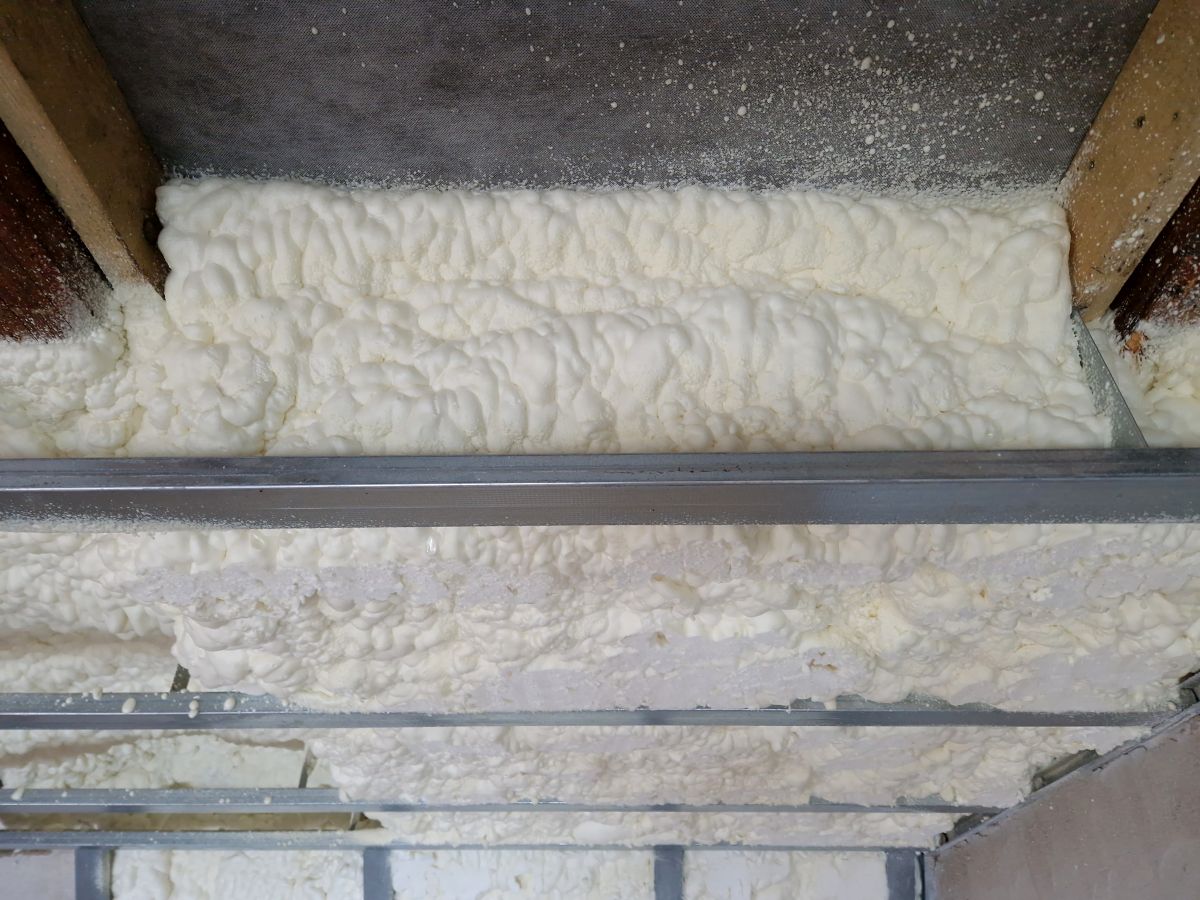
Spray foam roofing, often called SPF roofing, has become a go-to commercial roofing material for property owners looking for a seamless, energy-efficient alternative to traditional foam systems. Applied as spray polyurethane foam that expands into a solid closed cell foam layer, it creates a continuous, monolithic roof surface with no seams for water to work through. For Texas buildings facing extreme heat, sudden hail, and heavy rain, that combination of insulation and waterproofing makes SPF roofing systems worth a closer look. Property owners considering an upgrade to their commercial roofing system often find a foam roof delivers advantages that traditional membranes simply can’t match. Here’s what this guide covers:
- Seven specific benefits spray foam roofing offers Texas buildings
- How spray foam compares to TPO, EPDM, and built-up roofing systems
- What the installation process and maintenance actually involve
- Common questions property owners ask before choosing spray foam
7 Benefits of Spray Foam Roofing for Texas Buildings
Spray foam brings a unique set of advantages that matter more in Texas than in milder climates, largely because of how the material handles heat, water, and structural movement.
- Seamless waterproofing: Because SPF is applied as a liquid and expands into a single continuous layer, there are no seams, laps, or fasteners for water to find a way through.
- Superior insulation value: As a closed cell foam, SPF delivers a higher R-value per inch than most traditional roofing insulation, which directly reduces how hard a building’s HVAC system has to work and improves overall energy efficiency.
- Lightweight application: Spray foam adds minimal weight to a roof deck compared to built-up roofing or ballasted systems, which can matter for older buildings with structural load limits.
- Self-flashing around penetrations: The foam conforms to vents, pipes, and equipment curbs as it’s applied, eliminating many of the failure points that plague traditional flashing details.
- Renewable protective coatings: SPF roofs can be recoated every 10 to 15 years rather than fully replaced, extending the system’s life at a fraction of a full roof tear off and replacement cost.
- Reduced ponding water risk: Foam can be applied in varying thicknesses to build in proper slope toward drains, addressing ponding issues that plague many low slope roofs.
- Wind uplift resistance: A fully adhered, monolithic surface has no loose seams or mechanical fasteners for wind to catch, making SPF systems more resistant to uplift during high wind events than many attached membrane systems.
Why Energy Efficiency Matters More in Texas
Texas summers push HVAC systems harder than almost anywhere else in the country, and roofing plays a bigger role in that equation than many property owners realize. A well-insulated roof reduces how much heat transfers into the building below, which translates directly into lower cooling costs during the months that matter most for a commercial utility bill. Over the life of a roof, that efficiency gain often adds up to a meaningful share of the total cost of ownership, not just a marketing point.
Spray Foam vs. Traditional Commercial Roofing Systems
Seeing spray foam next to the more familiar commercial roofing options helps clarify where it actually stands out.
| Feature | Spray Foam | TPO/EPDM | Built-Up Roofing |
| Seams | None, fully monolithic | Heat-welded or taped seams | Multiple overlapping layers |
| Insulation | Built-in, high R-value | Added separately | Added separately |
| Weight | Very lightweight | Lightweight | Heavy |
| Typical lifespan | 20 to 30+ years with recoating | 15 to 25 years | 15 to 20 years |
| Repair approach | Recoat and patch as needed | Full membrane replacement eventually | Full roof tear off eventually |
What Installation and Maintenance Actually Involve
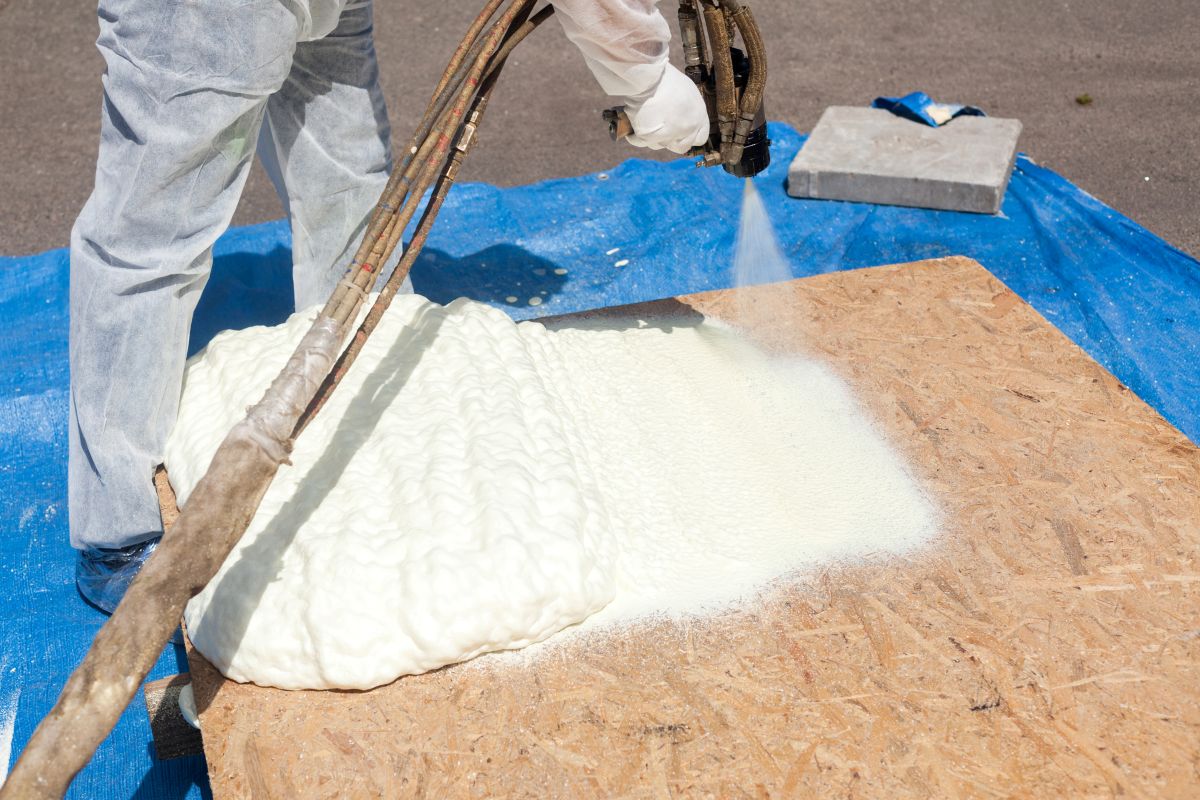
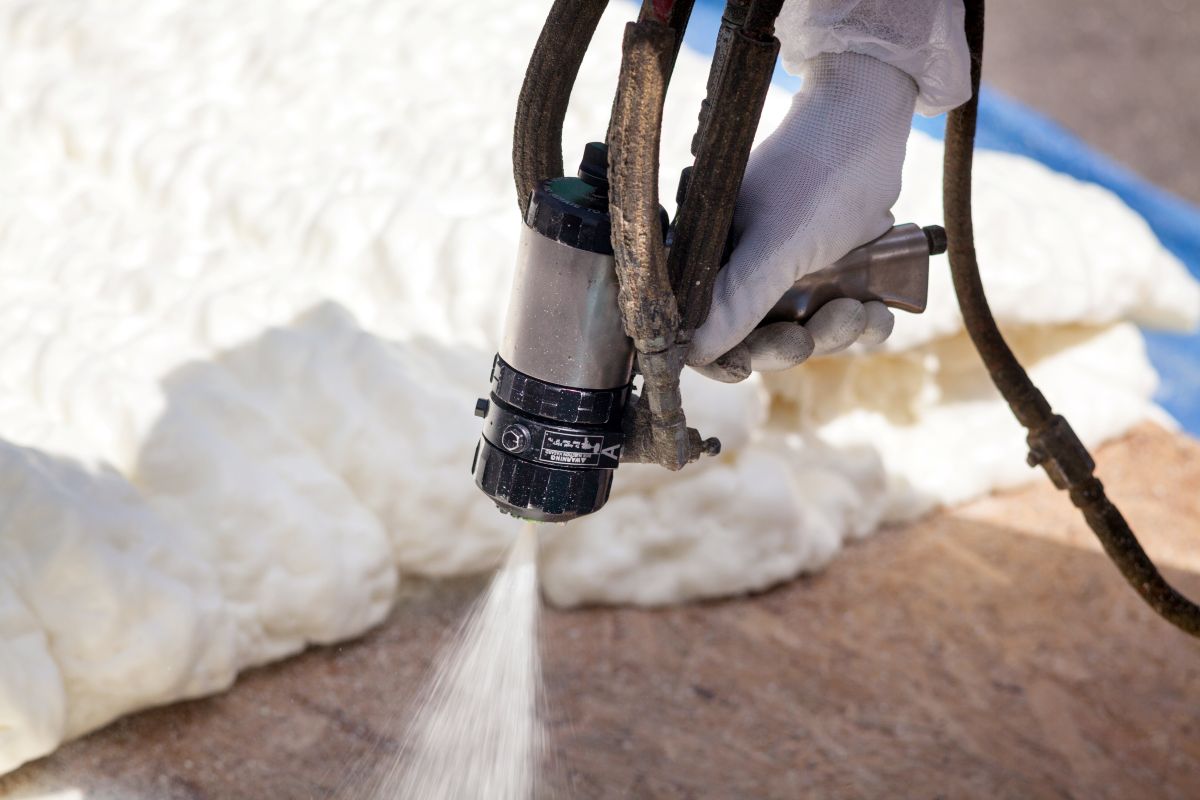
SPF roofing requires specialized equipment and trained applicators, which makes contractor experience especially important for this system to be properly installed.
- Weather-dependent application: The installation process must fall within specific temperature and humidity ranges, so timing depends heavily on forecast conditions.
- Protective coating requirement: The foam itself needs a top coat that shields it from UV exposure, typically silicone or acrylic, to prevent degradation from sun exposure.
- Annual inspections: Foam roofs benefit from yearly inspections to check coating thickness and catch any minor damage before it turns into extensive repairs.
- Recoat scheduling: Planning a recoat of the entire roof every 10 to 15 years, rather than waiting for visible problems, keeps the roof coating performing at its intended lifespan.
Nearly half of the energy used in a typical building goes toward heating and cooling, according to ENERGY STAR’s home and building efficiency guidance. That figure underscores why a roofing system’s insulation value matters just as much as its waterproofing performance, especially for Texas properties running air conditioning for a large part of the year.
Spray Foam Roofing for Fort Worth Commercial Properties
Fort Worth businesses deal with intense summer heat, sudden hailstorms, and heavy seasonal rain, all of which put real pressure on a flat commercial roof. Spray foam’s combination of insulation and seamless waterproofing addresses several of these challenges at once rather than requiring separate solutions for each one.
- Heat performance: The insulation value of a spray foam roof surface helps reduce rooftop heat transfer during Fort Worth’s long, hot summer stretches.
- Hail resilience: A properly coated SPF roof can absorb minor hail impact without the granule loss or membrane punctures common on other systems.
- Storm water management: Custom-tapered foam application helps direct water toward drains, reducing the ponding issues common after heavy Texas rainfall.
We’re proud to serve business and property owners in Fort Worth and nearby communities with commercial roofing options, including SPF systems suited to the demands of North Texas weather.
Frequently Asked Questions About Spray Foam Roofing
Property owners considering spray foam roofing for the first time tend to ask similar questions before moving forward.
Is spray foam roofing more expensive than TPO or EPDM?
Upfront costs are often comparable to or slightly higher than single-ply membranes, but spray foam’s insulation value and recoat-based maintenance model can lower total cost of ownership over the life of the roof.
Can spray foam be applied over an existing roof?
In many cases, yes. Spray foam can often be applied directly over an existing roof in good structural condition, avoiding the cost and disruption of a full tear-off.
How long does a spray foam roof actually last?
With proper maintenance and recoating every 10 to 15 years, an SPF roof system can perform well beyond 30 years, since recoating extends the underlying foam rather than requiring full replacement.
Does spray foam roofing work on steep-slope buildings?
Spray foam is primarily used on flat or low slope roofs. Steep-slope residential and commercial buildings typically use shingles, metal, or tile instead, where spray foam isn’t the practical choice.
Making the Right Call for Your Building
Spray foam roofing offers a genuinely different approach to flat roof performance, combining insulation and waterproofing into a single seamless system built for the extremes Texas weather regularly delivers. For property owners weighing options against traditional membranes, the long-term energy savings and recoat-based maintenance model are worth serious consideration.
MINT Exteriors has helped Texas and Oklahoma property owners evaluate commercial roofing options, including spray foam systems, since 2007. Request your free inspection today to find out whether spray foam roofing is the right fit for your building.

